
Real estate and capital projects
Corporate Real Estate (CRE) leaders are under constant pressure to optimize portfolios, reduce costs, and support evolving business strategies. Yet many organizations only associate CRE with leases and construction, then missing a wide range of project types where early decisions can significantly influence outcomes.
In reality, CRE portfolios are shaped by multiple categories of projects, each carrying different levels of risk, complexity, and opportunity. Understanding these project types, and when to intervene strategically, is essential for making confident, value-driven decisions.
Below is an overview of the most common CRE project categories, followed by why early-stage planning is where organizations gain the greatest advantage.
1. Office portfolio projects
These projects focus on adapting existing office assets to changing business needs, work models, and occupancy strategies. Think of cosmetic upgrades, workstations repositioning to full gut renovation that involve the demolition and building the entire floor plate. Typical examples include:
Office renovations and interior upgrades: Planned improvements to existing office spaces to modernize layouts, finishes, systems, and employee amenities.
Tenant improvements (TI) and fit-out projects: Interior construction projects that adapt leased space to a tenant’s operational, functional, and branding requirements.
Workplace reconfigurations (open office, hybrid work or densification.): Replanning office layouts to support new work models, increase utilization, and align space with workforce needs.
Floor restacking and space optimization: Strategic reallocation of teams and functions across multiple floors to improve efficiency, reduce costs, and support phased changes.
Office expansions or contractions: Projects that increase or reduce occupied space in response to organizational growth, consolidation, or portfolio strategy.
Headquarters (HQ) refresh or repositioning initiatives: Comprehensive updates to a corporate headquarters to reflect brand identity, culture, leadership needs, and long-term business strategy.
Workplace experience and support projects: These projects support productivity, collaboration, and talent retention. these projects strongly influence space utilization and long-term real estate performance. Typical examples include Collaboration space upgrades, Conference and training center development, Wellness spaces, quiet rooms, and employee amenities, Cafeterias and shared common areas, Technology-enabled workplaces (AV, smart offices)
These projects directly impact employee experience, operational efficiency, and long-term occupancy costs—yet they are often initiated without sufficient upfront validation. You need to plan better and decide faster, with the help of a trusted professional that can provide constructability review for your proposed layouts and develop corresponding budgets, so you can decide with confidence.
2. Leasing and transactional projects
Transactional decisions have long-term financial implications and limited flexibility once executed. In many situations CRE leaders have prospect locations for new leases or new plan for extending existing leases. Lease transaction usually requires construction projects, either to decommission existing spaces, sublease a portion of the space or renovate existing space as part of a capital planning. Common CRE transactional projects include:
New office leases: Securing new leased space aligned with business needs, growth plans, and portfolio strategy, supported by early test-fits and cost validation.
Lease renewals and renegotiations: Reviewing space requirements and financial terms to optimize lease conditions and control future capital and operating costs.
Relocations and site selection exercises: Assessing potential locations based on cost, workforce access, operations, and long-term portfolio objectives.
Subleasing or space disposals: If you lease an entire floor plate, you may sublease a portion that is no longer required to support portfolio optimization and cost reduction initiatives.
Exit strategies and decommissioning projects: Planned withdrawal from leased space, often requiring demolition back to base building conditions prior to returning the premises to the landlord.
Without early technical and cost validation, organizations risk signing leases that later require expensive adjustments, or worse, lock in inefficiencies for years. CRE leaders need to work with a trusted partner that can help their organisation make confident pre-leasing planning decision, before they commit to lease termination or a new lease.
3. Portfolio optimization and cost reduction initiatives
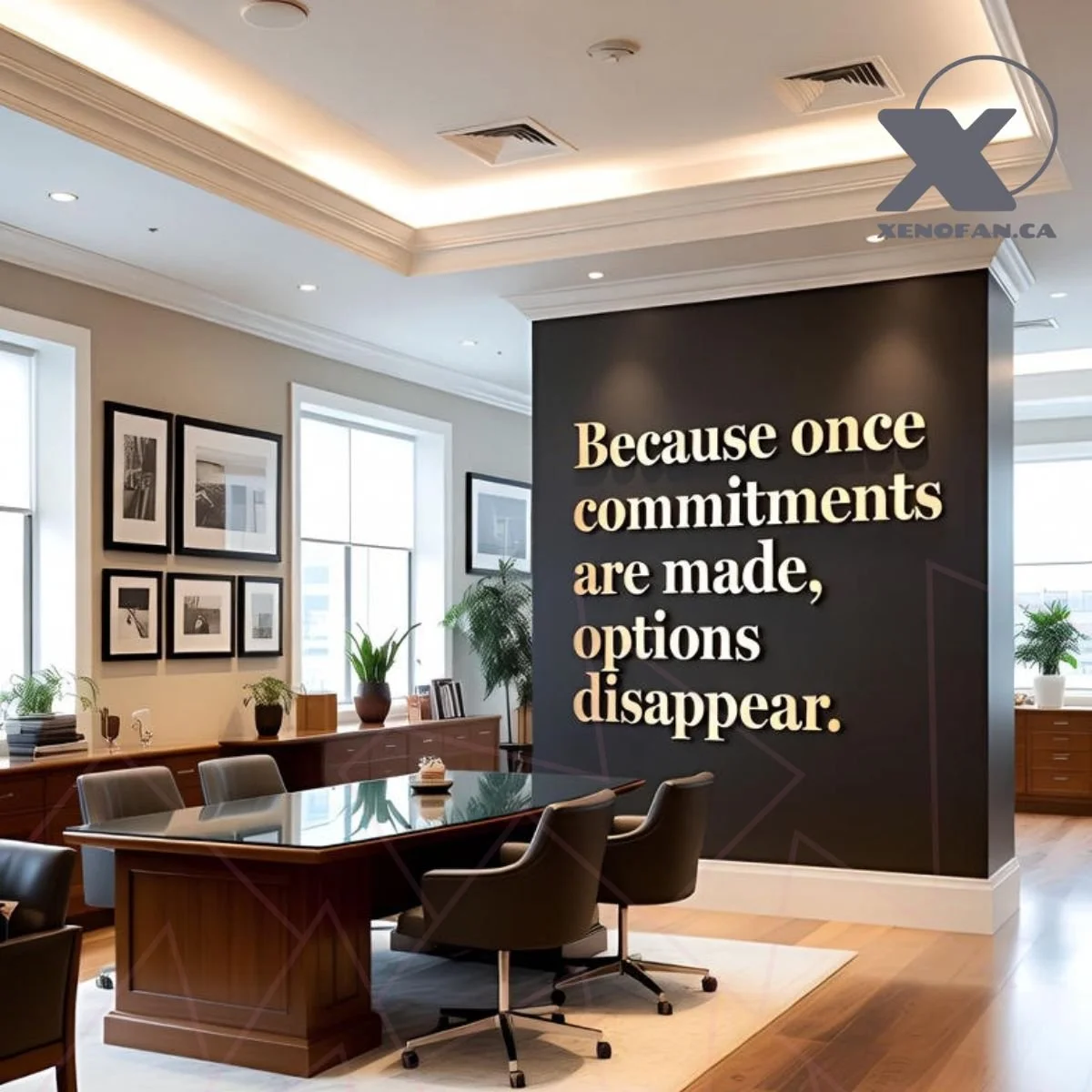
These office renovations and leasing transactional projects are often driven by executive mandates to reduce footprint and improve capital efficiency. These initiatives typically involve:
Portfolio rationalization and footprint reduction
Space utilization studies and test-fits
Consolidation of multiple locations
Standardization of layouts and finishes across sites
Cost benchmarking and scenario modeling
When executed properly, these initiatives create measurable savings. When rushed, they can disrupt operations and erode stakeholder confidence.
CRE portfolio optimization and cost reduction refer to a structured approach used by Corporate Real Estate leaders to ensure the organization’s real estate portfolio supports business objectives while minimizing total occupancy and capital costs.
Portfolio optimization focuses on aligning the real estate footprint with business needs to maximize efficiency, utilization, and flexibility. Cost reduction focuses on lowering total occupancy costs through right-sizing, lease renegotiations, consolidation, and smarter space planning.
4. Banking and financial services
Financial institutions face unique operational, security, and compliance requirements. In Canada, this reality applies to organizations such as RBC, TD, Scotiabank, BMO, CIBC, National Bank, and Desjardins, as well as major insurers like Manulife, Sun Life, Canada Life, and Intact Financial. Collectively, these organizations operate hundreds to thousands of locations across the country and employ tens of thousands of people in branches, corporate offices, operations centres, contact centres, and trading or underwriting environments.
At this scale, Corporate Real Estate decisions are never isolated. A single planning error can quickly translate into operational disruption, regulatory exposure, security risk, and significant cost overruns when repeated across a large portfolio.
Common CRE projects in the banking and insurance sector include:
Branch renovation and refresh programs
Branch relocations or closures
Flagship branch developments
Corporate office and back-office fit-outs
Trading floor and operations centre reconfigurations
Secure areas and compliance-driven upgrades
For large financial institutions and insurers managing complex real estate portfolios, early-stage planning, validation, and scenario testing are essential to controlling risk, costs, and portfolio-wide consistency.
Independent cost opinion
Before you commit capital, test the number.
An independent cost opinion on office, branch and capital asset projects, delivered before the lease is signed, the budget is approved or a contractor is engaged. Xenofan is paid for the analysis, not the project.
For corporate real estate, finance and asset management leaders facing a capital decision.
Where CRE risk is really created
Most CRE risk is not created during construction. It is created before contracts, leases, or budgets are finalized. Planning requires making choices, which is the essence of strategy—deciding which scenarios to pursue and, just as importantly, which ones not to pursue.
Decision-making at this stage requires a trusted partner—a professional or consultant—who can provide timely responses, support funding approvals, and help mitigate emerging risks across the CRE portfolio.
This is where assumptions are made about costs, constructibility, timelines, and operational impacts, often without sufficient validation. This is where Xenofan focuses its expertise:
Constructibility and risk reviews for test-fits during pre-lease planning
Early budgeting and cost certainty studies
Capital planning, prioritization, and scenario analysis
Decision support before lease execution, budget approval, or contractor engagement
Confident decisions at this stage consistently outperform reactive execution later. Think slow, act fast, and do not let decision gaps jeopardize project funding or delivery.
Why this matters for CRE leaders
CRE leaders are not measured by how well they manage construction, they are measured by how well they optimize portfolios, control risk, and enable the business. Keeping in mind that over 50% of projects failures are due to poor communication (PMI 2015) . Even worse, over 90% exceed budgets and schedules (Flyvbjerg & Gardner, 2023).
Organizations that invest in early-stage clarity:
Avoid unnecessary capital spend
Reduce change orders and surprises
Align real estate decisions with business strategy
Make faster, more defensible decisions
How Xenofan supports CRE decision makers
Xenofan helps organizations plan better and decide faster by bringing technical, financial, and constructibility insight before commitments are made. Xenofan is a general contractor helping organisations with preconstruction services and project delivery services.
Whether you are:
Evaluating a lease
Rationalizing a portfolio
Planning an office renovation
Or testing scenarios for future growth
Or planning a project delivery
Early clarity changes everything.
Plan better. Decide faster. Deliver excellence.
Learn how Xenofan helps CRE teams make confident office renovation and portfolio decisions
Your budget
Where does your number stand?
Already have an estimate?
Have it reviewed line by line before you take it to committee.
Have my budget reviewed →Reply within one business day.
References
Monkhouse, Peter. “My Project Is Failing, It Is Not My Fault.” Paper presented at PMI® Global Congress 2015—EMEA, London, England. Newtown Square, PA: Project Management Institute, 2015
Bent Flyvbjerg and Dan Gardner. How Big Things Get Done: The Surprising Factors That Determine the Fate of Every Project, from Home Renovations to Space Exploration and Everything In Between, 2023.